The Acrobats - Kaleido Entertainment
poster
From hand-crafted masterpieces to outstanding performances, discover the extraordinary talent lighting up our festivals Choose your festivalPowered by Fever

The Acrobats

A living tradition, reimagined for today. Traditional Chinese acrobatics and cultural performances.

The Acrobats

Traditional Chinese acrobatics & cultural performances

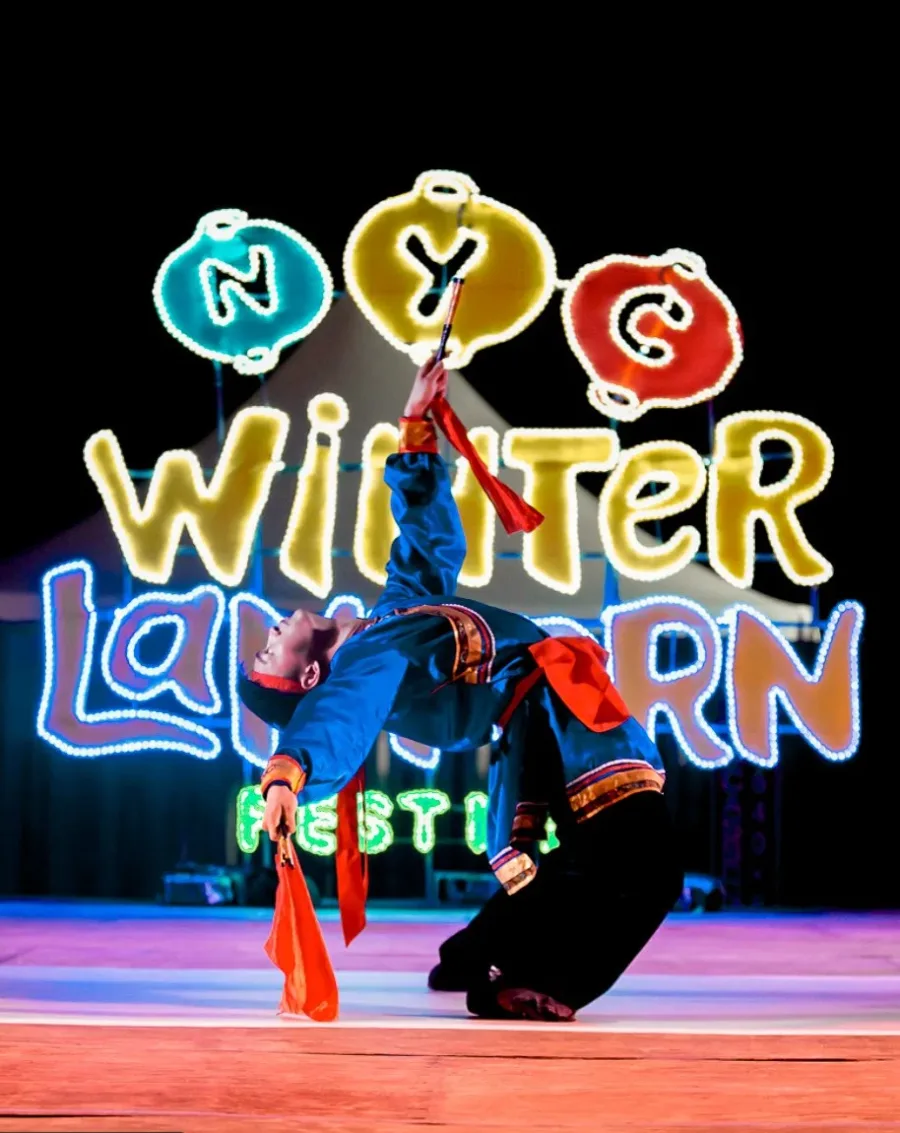
A living tradition, reimagined for today. Signature acts: 9 · Per act: 5 min · Full program: 45 min Created for U.S. theaters, cultural festivals, museums, and special events. Chinese acrobatics brings together generations of disciplined training, distinctive cultural imagery, and immediate visual storytelling. This showcase presents fifteen solo acts selected for their technical range, portability, and appeal to audiences of all ages. About the Zigong Acrobatic Troupe The Zigong Acrobatic Troupe, founded in 1954 in Sichuan, China, is an award-winning professional performing group. They are famous for traditional balancing acts, jar-throwing, contortion, and their signature "Bench Balancing / Chinese Dragon" routine where artists balance stacks of heavy wooden stools on their heads. They frequently tour internationally, headlining events like the Winter Lantern Festival in the United States. Programs at a glance: The Joyful Chef · Flying Dragon Diabolo · Imperial Porcelain · Dancing Umbrellas · Sky Wheel & Flying Bowls · Golden Cascade · Tables & Flags in Flight · Rolling Harmony · Racket Rhythm
The Acrobats — placeholder

The Joyful Chef

Performed by: Xie Jun • Dai Guanghui Chinese Cultural Background: Chinese acrobatics has long turned ordinary objects from daily life into instruments of skill and imagination. Inspired by the energy of a Chinese banquet kitchen, this comic routine transforms plates, utensils, and serving props into a celebration of hospitality, festivity, and shared laughter. What Makes This Act Unique: Unlike conventional juggling, the act creates a complete theatrical character and story around familiar kitchen objects. Precision technique is hidden inside physical comedy, making the performance instantly accessible across languages and especially engaging for family audiences. Performance Highlights: - Fast ensemble-scale visual patterns presented by a solo artist - Character comedy, object manipulation, and audience connection - A festive opening that communicates without spoken language

Flying Dragon Diabolo

Performed by: Wang Li • Pan Ling • Wang Xiaoli Chinese Cultural Background: Known in China as kongzhu, the Chinese diabolo developed from a traditional folk toy into one of the country's most recognizable acrobatic arts. Its spinning form, rhythmic sound, and sweeping pathways are closely associated with community celebrations, temple fairs, and public festivals. What Makes This Act Unique: The diabolo combines the speed of object manipulation with the full-body lines of dance. The performer must continuously create and redirect momentum while sending the spinning object through aerial, cross-body, and off-axis patterns — a demanding combination of power, timing, and delicacy. Performance Highlights: - High aerial releases followed by exact, controlled catches - Rapid acceleration, directional changes, and body-wrap sequences - Traditional Chinese folk imagery presented with contemporary pacing

Imperial Porcelain

Performed by: Zhu Yi • Mou Rui • Chen Xiaoyong Chinese Cultural Background: Jar balancing is a signature discipline of Chinese acrobatics. This presentation draws on the visual heritage of Chinese opera and blue-and-white porcelain, an art form admired worldwide for its refined decoration and connection to China's historic ceramic craftsmanship. What Makes This Act Unique: A large porcelain-style jar becomes both a heavy balancing object and a moving sculpture. The performer must control its shifting center of gravity through subtle changes in posture while preserving an appearance of calm, elegance, and ceremonial dignity. Performance Highlights: - Oversized jars balanced, rotated, and redirected with precision - Opera-inspired styling and unmistakable Chinese visual identity - A rare fusion of strength, concentration, and sculptural stage imagery

Dancing Umbrellas

Performed by: Dai Yue • Zhan Siqi Chinese Cultural Background: The oil-paper umbrella is a beloved image in Chinese art and everyday tradition, often associated with grace, celebration, and poetic beauty. In this specialized acrobatic form, the familiar parasol is reimagined as a spinning stage element controlled entirely by the performer's feet. What Makes This Act Unique: The performer lies on a support apparatus and independently controls several rotating umbrellas, creating layered floral patterns in the air. The contrast between delicate visual beauty and extreme lower-body coordination makes this one of the program's most distinctive and photogenic acts. Performance Highlights: - Multiple parasols spinning simultaneously in changing formations - Exceptional foot dexterity, flexibility, and independent leg control - A lyrical moving picture inspired by classical Chinese aesthetics

Sky Wheel & Flying Bowls

Performed by: Liao Xiaoyan Chinese Cultural Background: High-unicycle and bowl-kicking acts are celebrated examples of Chinese acrobatics' tradition of combining several advanced skills into a single escalating routine. Bowls, commonly associated with the Chinese dining table, are transformed into airborne objects of precision and suspense. What Makes This Act Unique: The artist must ride and stabilize a towering unicycle while kicking bowls from the foot into a stack balanced on the head. Each discipline is difficult on its own; performing them simultaneously creates a rare technical climax built on balance, courage, and exact timing. Performance Highlights: - High-unicycle riding with continuous balance control - Bowls launched from the foot and caught in a head-level stack - A suspenseful multi-discipline climax with exceptional audience impact
Sky Wheel & Flying Bowls — placeholder

Golden Cascade

Performed by: Liu Jiezhong Chinese Cultural Background: Hand juggling has deep roots in Chinese acrobatic performance, where small objects are used to demonstrate rhythm, speed, and fine motor control. This contemporary interpretation extends the tradition by combining rapid ball patterns with full-body balance. What Makes This Act Unique: The routine moves beyond conventional ball juggling by placing the artist on a rolling cylinder. Hand precision and lower-body stability must operate independently, creating a layered technical challenge in which every small movement affects the entire balance system. Performance Highlights: - Rapid multi-ball patterns and clean, rhythmic exchanges - Juggling combined with rolling-cylinder balance - A modern presentation of a foundational Chinese acrobatic skill

Tables & Flags in Flight

Performed by: Zhang Shengcui • Tang Xiaoqin Chinese Cultural Background: Foot juggling is a distinctive branch of Chinese acrobatics preserved through specialized training traditions. From a supported position, performers use the legs and feet to lift, rotate, balance, and redirect large objects that normally require the strength and coordination of the whole body. What Makes This Act Unique: Few circus disciplines reverse the body's usual roles so completely: the feet become hands while tables and large flags appear almost weightless. The remarkable scale of the props makes the performer's strength visible, while refined control preserves grace and musicality. Performance Highlights: - Full-size tables and large flags manipulated entirely by the feet - Powerful rotations balanced by precise alignment and soft landings - A rare Chinese discipline combining strength, flexibility, and elegance
Tables & Flags in Flight — placeholder

Rolling Harmony

Performed by: Luo Yujie • Zeng Lei Chinese Cultural Background: Rolling-board acrobatics reflect a central theme in Chinese performance culture: harmony created through balance and constant motion. The addition of bowls links the act to familiar Chinese material culture while transforming everyday tableware into a precise acrobatic vocabulary. What Makes This Act Unique: The supporting surface never becomes still. While balancing on a board over a moving cylinder, the artist must kick, catch, and stack bowls with exact placement. The performance makes instability itself the foundation of control. Performance Highlights: - Continuous equilibrium maintained above a rolling cylinder - Bowl kicking, catching, and stacking during uninterrupted movement - An escalating sequence that turns instability into visual harmony

Racket Rhythm

Performed by: Dai Guanghui Chinese Cultural Background: This original act connects the precision of Chinese hand juggling with badminton, a sport widely enjoyed across China and throughout Asia. By moving a familiar sporting object into the theater, the routine creates a playful bridge between contemporary popular culture and traditional acrobatic technique. What Makes This Act Unique: Badminton rackets have an uneven shape and an unusual center of gravity, making their rotation far less predictable than standard juggling clubs. Their open frames and bold silhouettes also produce graphic patterns in the air that are immediately recognizable to audiences. Performance Highlights: - Multiple rackets exchanged in rapid rotational patterns - A highly unusual prop vocabulary rarely seen in circus performance - Athletic precision combined with comic character and visual rhythm
Racket Rhythm — placeholder